

Perimenopause Diet Plan: A Flexible Guide for Real Life
A flexible perimenopause diet plan with practical meal ideas for protein, fiber, bone health, busy days, and sustainable weight goals—without rigid food rules.
Shelog Editorial
Reviewed for clarity and care

It is 3
a.m. and you are awake for no good reason. By breakfast, coffee feels less like a drink and more like emergency equipment. The toast barely touches your hunger, and the jeans that fit last year have suddenly developed opinions.So you search for a perimenopause diet plan. Within minutes, the internet has assigned you a detox, forbidden three food groups, and suggested that one seed can “balance” your hormones before Friday.
Let’s make this much less dramatic—and much more useful.
Here is the calmer answer: there is no single diet proven to be best for every woman in perimenopause. A useful plan simply helps you build satisfying meals, look after your health, and work toward an appropriate weight goal—without asking dinner to perform endocrinology.
This guide gives you a seven-day framework you can adapt to your appetite, culture, budget, schedule, and health needs. It is not a calorie prescription, and nobody is going to confiscate your pasta.
The best perimenopause diet plan is not the most impressive one on Monday. It is the one that still works on a tired Thursday.
Before We Plan Dinner: What Is Perimenopause?
Perimenopause is the transition leading up to menopause. Periods may change. Sleep can become unpredictable. Hot flashes, mood changes, or a brain that temporarily hides familiar words may join the group chat. Some women notice many changes; others notice very few.
According to the US National Institute on Aging, the transition commonly begins between ages 45 and 55 and may last several years. Menopause itself is confirmed after 12 months without a period or spotting.
Your shape or weight may change too. Estrogen can be part of that story, but it is not the only character: aging, muscle, movement, sleep, stress, food, medicines, health conditions, and genetics may all be involved. Our guide to estrogen and weight gain unpacks that without blaming every tight waistband on one hormone.
Perimenopause also looks different from woman to woman. A menu cannot confirm that you are in it, and a change in appetite or weight is not a hormone test.
What Food Can Help With—and What It Cannot Fix
A balanced way of eating gives your body useful basics: protein, carbohydrates, fats, fiber, vitamins, and minerals. ACOG's midlife guidance pairs balanced nutrition with movement and preventive care; it does not prescribe a secret menopause menu.
That may sound less thrilling than a hormone-reset smoothie. It is also much more honest—and far easier to keep doing after the blender needs washing.
What it cannot do is equally important.
A diet cannot promise to:
- balance your hormones
- stop hot flashes for everyone
- remove fat from your belly specifically
- diagnose perimenopause or another health condition
- replace treatment when symptoms are affecting your life
NICE menopause guidance recommends individualized care and evidence-based options when symptoms are bothersome. In other words, lunch can support you, but lunch is not your gynecologist.
This is why the plan below focuses on reliable nutrition basics and real-life flexibility—not “hormone-reset” claims.
Give Every Meal Four Useful Jobs
Forget the shelf labelled menopause foods. Start with four useful jobs and let ordinary food do them.
1. Add something with staying power
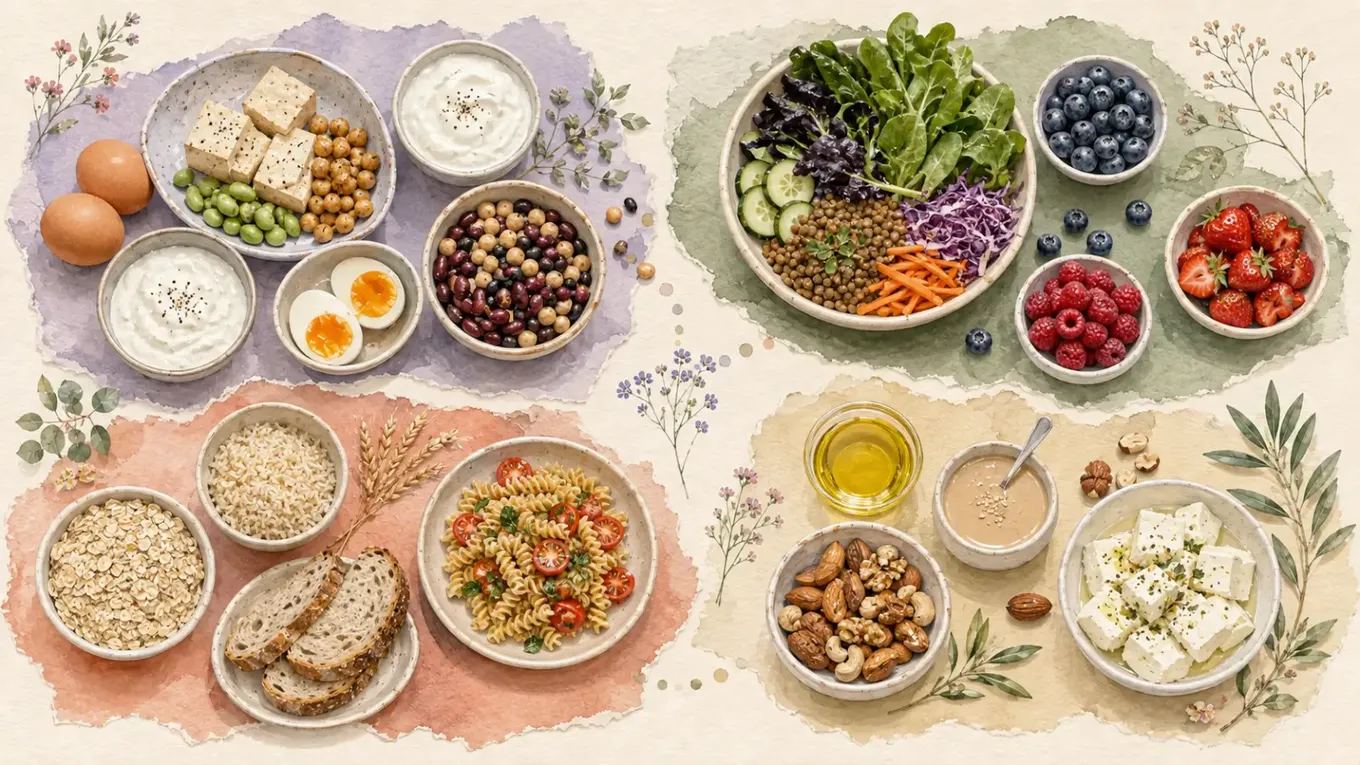
Protein helps your body maintain tissues including muscle, bone, and skin, as MedlinePlus explains. In a real kitchen, that might look like eggs, yogurt, fish, chicken, tofu, tempeh, beans, lentils, nuts, or seeds.
There is no rule that chicken must appear seven times a week. The USDA MyPlate protein guidance encourages variety and includes seafood, eggs, beans, peas, lentils, nuts, seeds, and soy foods as well as meat and poultry.
Ask, “What will make this meal last?” If lunch is three leaves and optimism, and you are hunting for biscuits an hour later, the salad is not a moral achievement. It probably just needed a little backup.
2. Invite something colorful—or conveniently frozen
Vegetables, fruit, beans, lentils, and whole grains bring fiber and a mix of nutrients. Fresh produce is lovely. It is not morally superior to the frozen peas waiting patiently in your freezer. USDA guidance counts fresh, frozen, canned, cooked, and dried vegetables.
That matters on a Wednesday night when chopping six vegetables feels like an unreasonable request. Frozen broccoli, canned beans, jarred tomato sauce, or a bagged salad can still build dinner.
If your usual diet is low in fiber, increase it gradually and drink enough fluid, as the National Institute of Diabetes and Digestive and Kidney Diseases advises. A sudden jump from “occasionally sees a lentil” to “entire pantry of legumes” may be memorable for the wrong reasons.
3. Let carbohydrates stay for dinner
Oats, rice, bread, potatoes, pasta, fruit, corn, and beans can all fit. Many bring fiber and useful nutrients along with energy—and pasta has never asked anyone to buy a hormone detox.
You may prefer a larger portion on active days or find that pairing carbohydrate with protein, plants, and fat makes a meal more satisfying. You do not need to remove an entire food group because a social-media graphic blamed it for “meno belly.”
If you use macro targets, treat them as adjustable rather than hormonal law. Our macro guide for women explains why the same percentage does not suit every body, goal, or Tuesday.
4. Make it tasty, and remember your bones
Olive oil, avocado, nuts, seeds, oily fish, cheese, and tahini can make a meal feel finished. Portions still matter when weight loss is a goal, but “delicious and satisfying” is not a design fault.
Bones deserve a little extra attention across the menopause transition. ACOG highlights calcium, vitamin D, weight-bearing movement, and strength exercise. Calcium needs also change with age: the NIH lists 1,000 mg a day for women ages 19–50 and 1,200 mg for women ages 51–70.
Food sources may include dairy products, calcium-set tofu, canned fish with edible bones, and fortified foods. Plant milks are not nutritionally identical; USDA MyPlate includes fortified soy milk and yogurt in the dairy group and recommends checking how alternatives contribute key nutrients. Read the label for calcium, vitamin D, protein, and added sugar instead of assuming every beige carton does the same job. If you are considering supplements, discuss your individual needs and medicines with a clinician or registered dietitian.
Seven Days That Can Survive a Real Calendar
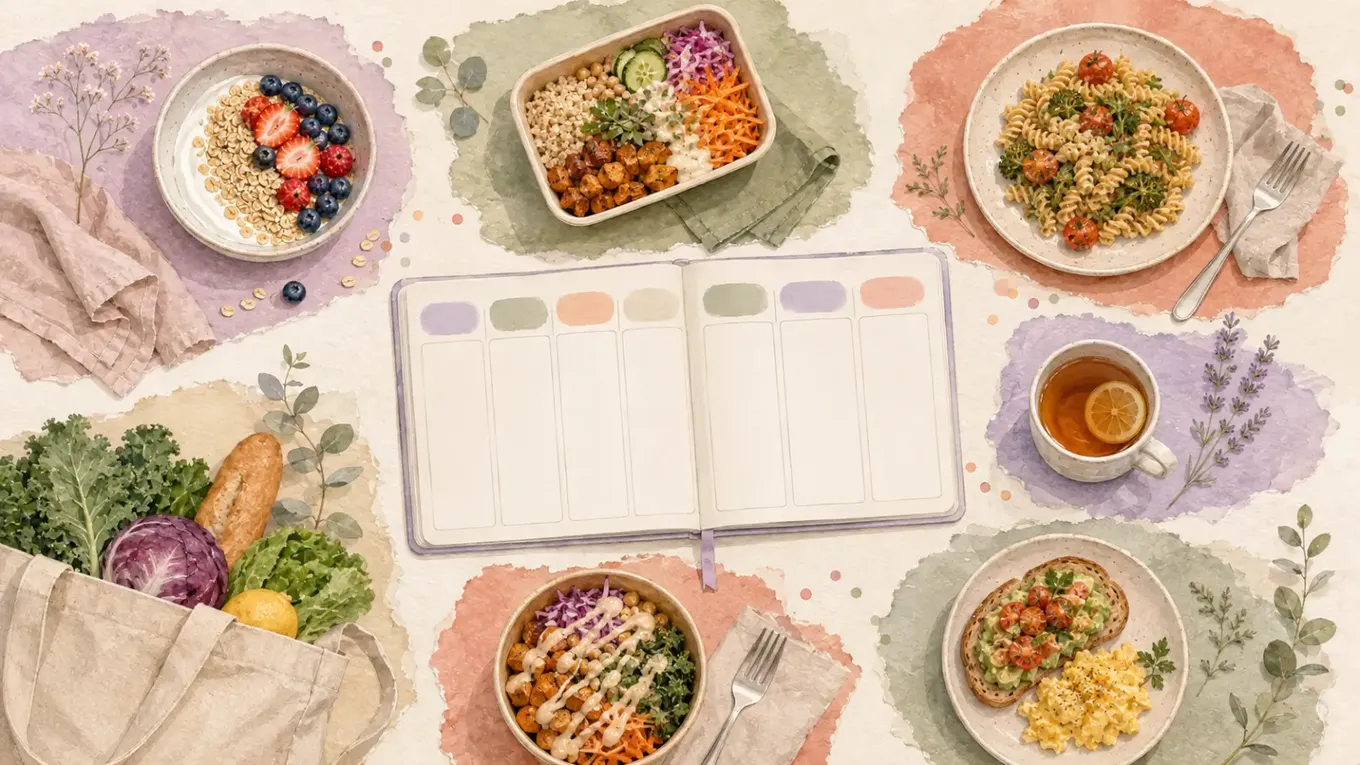
This is a perimenopause diet plan, not a seven-day obedience test. Swap the days, change the portions, repeat your favorites, and use food that already belongs in your life.
Day 1: Breakfast needs to earn its keep
Breakfast: Greek yogurt or fortified soy yogurt with oats, berries, and nuts.
Lunch: Lentil soup with whole-grain toast and fruit.
Dinner: Salmon or tofu, rice, and roasted or frozen vegetables with a sauce you actually like.
Give breakfast enough substance to carry you toward lunch. If you are hungry before then, have a snack. Hunger is information, not poor time management.
Day 2: The meeting-marathon day
Breakfast: Eggs or tofu scramble in a wrap with vegetables.
Lunch: A grain bowl with chicken, tofu, or beans; salad vegetables; and tahini or olive-oil dressing.
Dinner: Pasta with tomato sauce, white beans or lean meat, and a side of greens.
Keep one emergency option near your desk or in your bag: fruit with nuts, yogurt, roasted chickpeas, cheese and crackers, or another pairing that travels well. The goal is not to eliminate snacks. It is to avoid discovering at 5 p.m. that coffee accidentally became lunch.
Day 3: Dinner has not magically planned itself
Breakfast: Porridge made with dairy milk or fortified soy milk, topped with fruit and seeds.
Lunch: Leftovers, plus a piece of fruit or vegetables if the meal needs rounding out.
Dinner: Takeaway—perhaps a burrito bowl, sushi with edamame, a curry with rice, or a kebab plate with salad.
Takeaway can belong in a balanced week. Look for a protein source, some plants, and enough food to feel satisfied. You do not need to order the saddest item on the menu to prove you are trying.
Day 4: The low-energy day
Breakfast: Whole-grain toast with peanut butter and banana.
Lunch: Canned tuna or chickpeas mixed with yogurt or mayonnaise, served in a sandwich or over salad.
Dinner: A supermarket shortcut: rotisserie chicken or baked tofu, microwave grains, and frozen vegetables.
Convenience is a nutrition strategy. Keeping two or three easy meals available can protect the plan when sleep, work, caregiving, or symptoms use up the energy you expected to have.
Day 5: Other people are eating with you
Breakfast: Yogurt, fruit, and muesli, or yesterday's toast-and-egg combination.
Lunch: Vegetable and bean soup, a sandwich, or leftovers.
Dinner: Eat the shared meal—tacos, noodles, curry, pizza, or whatever is happening—and notice your hunger and comfort.
One social meal does not need compensation before or after. Skipping breakfast to “save calories” can leave some people uncomfortably hungry by dinner. A normal earlier meal may make the evening easier to enjoy.
Day 6: The slower weekend day
Breakfast or brunch: Eggs, beans, sautéed vegetables, avocado, and toast—or a similar combination from your own food culture.
Lunch: Something light if you are hungry, such as soup, yogurt and fruit, or hummus with vegetables and pita.
Dinner: A tray bake with fish, chicken, tofu, or chickpeas; potatoes; and colorful vegetables.
If weekend timing differs from weekdays, it is allowed to differ. A flexible plan responds to your day rather than forcing every day into the same boxes.
Day 7: A reset with no detox in sight
Breakfast: Repeat the breakfast that felt best this week.
Lunch: Use leftovers in a grain bowl, wrap, soup, or omelet.
Dinner: Choose one meal you would genuinely like to eat again next week.
Then make a tiny plan: select two breakfasts, two lunches, and three dinners for the coming week. There is no prize for inventing 21 original recipes. Repetition reduces decisions; a little variety keeps repetition pleasant.
Swap It; Do Not Scrap the Whole Plan
An empty yogurt tub should not have the power to cancel breakfast. When something is missing, swap it for another food that can do a similar job.
| If the plan suggests | You could use |
|---|---|
| Greek yogurt | Fortified soy yogurt, cottage cheese, or eggs alongside fruit |
| Salmon | Sardines, trout, tofu, tempeh, beans, chicken, or another protein |
| Brown rice | White rice, potatoes, whole-grain bread, couscous, noodles, or corn |
| Fresh vegetables | Frozen vegetables, canned vegetables, soup, or bagged salad |
| Nuts | Seeds, seed butter, avocado, olive oil, or another suitable fat |
| A cooked lunch | Leftovers, a sandwich, supermarket soup, or a balanced takeaway |
The foods are not interchangeable in every nutrient, allergy, or medical context. The point is to preserve the shape of the meal without making one unavailable ingredient capable of ruining your week.
If Weight Loss Is Also on Your Mind
Perimenopause does not assign weight loss as homework, and not every body change needs correcting. If losing weight is appropriate and something you want, make the same plan a little more intentional—not dramatically smaller and considerably sadder.
Mayo Clinic explains that hormonal changes may encourage more fat around the abdomen, while aging, activity, sleep, food, and genetics also affect weight. Your body, annoyingly, does not take requests about which area changes first.
Start with changes that do not require a personality transplant:
- keep meals regular enough that you are not repeatedly arriving ravenous
- include satisfying protein and fiber-rich foods
- notice calorie-dense extras without declaring them forbidden
- keep strength-building activity in the wider plan if it is appropriate for you
- review trends across weeks, not one morning
- make one adjustment at a time
Crash diets can make a loud entrance and a poor long-term roommate. ACOG favors gradual loss through eating and activity changes that can last.
If the plan leaves you preoccupied with food, exhausted, cold, dizzy, unable to recover from exercise, or avoiding normal social life, “more discipline” is not the next step. Speak with a qualified health professional.
Do Any Foods Need a Breakup Speech?
There is no universal perimenopause blacklist—and no need to break up with bread by text.
Some women notice that alcohol, caffeine, or spicy foods seem to sit near a hot flash or a rough night. Others notice no useful pattern at all. Observe your own experience without putting dinner on trial. If something repeats, change one thing and see what happens.
You may choose highly processed snacks, sugary drinks, or alcohol less often or in smaller amounts. That is very different from claiming a biscuit disrupted your hormones.
Food restrictions also have costs. Removing dairy without replacing its nutrients, cutting all carbohydrates, or avoiding whole categories based on a symptom list can make eating harder and less nutritionally complete. If you have diabetes, kidney disease, celiac disease, significant digestive symptoms, food allergies, or another condition affecting nutrition, use a personalized plan from an appropriate clinician or registered dietitian.
The Sunday-Night Check-In
After a week, make tea, open your notes, and resist the urge to issue every meal a report card. You are looking for clues that could make next week easier.
Ask:
- Which breakfast kept me comfortable through the morning?
- When did I become unusually hungry, and what had the day looked like before then?
- Which convenient meal saved me from skipping food?
- Did caffeine, alcohol, or meal timing appear repeatedly near poor sleep or symptoms?
- Did I have enough energy for daily life and movement?
- Which meal felt enjoyable enough to repeat?
Seven days cannot prove that a food caused—or cured—a symptom. Sleep, stress, room temperature, medicines, menstrual timing, illness, and plain coincidence can all change a day. Your notes can reveal a useful question without pretending to be a clinical trial.
A kinder food diary can help you notice what happened without turning the page into evidence for the prosecution.
Let Shelog Remember the Week for You
By Sunday, Tuesday's lunch may already be a mystery. Shelog keeps food, mood, workouts, water, and weight in one diary, along with the useful context around them: the meeting that delayed lunch, the short night before a hungry afternoon, or the meal that worked surprisingly well.
Use that context to choose one small adjustment, repeat what helped, or bring a clearer record to a health professional. The aim is not a flawless week. It is a week you can learn from.
Shelog does not measure hormones, diagnose perimenopause, prescribe a diet, or determine whether a symptom was caused by food. Weight Trend uses recent weight records to estimate short-term direction and show uncertainty. It does not use food, workouts, symptoms, menstrual-cycle data, or hormone levels to explain why the trend changed.
When to Talk With a Health Professional
Perimenopause is common, but you do not have to manage difficult symptoms alone. Talk with a clinician if symptoms are affecting your sleep, mood, work, relationships, or quality of life, or if you are unsure whether perimenopause explains what you are experiencing.
The National Institute on Aging recommends medical review for periods happening very close together, heavy bleeding, bleeding lasting more than a week, or bleeding or spotting between periods or after sex. Any bleeding after 12 months without a period also needs medical assessment.
Seek personalized nutrition advice if you are pregnant or breastfeeding, underweight, managing an eating disorder, taking medicines that affect weight or appetite, or living with a condition that changes your nutrition needs.
Frequently Asked Questions
What is the best diet for perimenopause?
The one you can nourish yourself with on ordinary days. For most women, that means a mix of protein foods, vegetables and fruit, fiber-rich carbohydrates, enjoyable fats, and reliable sources of calcium and vitamin D. It should fit your health, culture, budget, appetite, and calendar—not somebody else's immaculate Sunday meal prep.
Can a perimenopause diet get rid of belly fat?
No. Bodies do not accept delivery instructions for fat loss. Exercise aimed at one area can strengthen its muscles, but it does not selectively remove the fat there, as Harvard Medical School explains. Hormones may influence where fat is stored, while aging, muscle, activity, sleep, food, genetics, medicines, and health conditions also matter.
What foods should I avoid during perimenopause?
There is no universal list. You might drink less alcohol, choose sugary drinks less often, or test a food that repeatedly seems connected with a symptom. One awkward Tuesday is not proof, though. Avoid sweeping restrictions unless you have a nutritional, medical, ethical, or personal reason for them.
What is the 3-3-3 eating rule for perimenopause?
It is a catchy name without one consistent definition. The major clinical guidance reviewed for this article does not use “3-3-3” as a standard perimenopause treatment. If a simple pattern helps you remember meals, lovely—but it is not a hormone treatment or a rule every woman has somehow missed.
Can I use this plan to lose weight quickly?
This framework is built for sustainable meals, not a race with the bathroom scale. If weight loss is appropriate, the pace should fit your starting point, health, nutrition needs, and real life. A registered dietitian or clinician can help you choose an individualized target.
The Takeaway
A useful week does not require a hormone detox or a perfect pantry.
Build meals with enough substance to support your day. Keep protein, plants, carbohydrate, fats, flavor, and bone health in the picture. Use shortcuts. Repeat what works. Let a shared dinner remain a shared dinner.
Then review the week with curiosity rather than suspicion. Perimenopause may change the context, but your meals still have to fit the person living the life.
Sources
- National Institute on Aging: What Is Menopause?
- American College of Obstetricians and Gynecologists: The Menopause Years
- American College of Obstetricians and Gynecologists: Weight Control—Eating Right and Keeping Fit
- National Institute for Health and Care Excellence: Menopause—Identification and Management
- NIH Office of Dietary Supplements: Calcium Fact Sheet for Consumers
- NIH Office of Dietary Supplements: Vitamin D Fact Sheet for Consumers
- National Institute of Diabetes and Digestive and Kidney Diseases: Eating, Diet, and Nutrition for Constipation
- MedlinePlus: Dietary Proteins
- USDA MyPlate: Protein Foods
- USDA MyPlate: Vegetables
- USDA MyPlate: Dairy
- Mayo Clinic: The Reality of Menopause and Weight Gain
- Harvard Medical School: Taking Aim at Belly Fat
This article is for general education and is not a substitute for personal medical or nutrition advice.
Take Shelog with you
Take Shelog with you
Shelog turns the ideas in this article into a simple daily diary—food, mood, movement, and weight in one calm place.