

10 High-Protein Breakfasts That Fit a Busy Morning
Ten easy high-protein breakfasts with ingredient amounts, simple steps, estimated nutrition, dairy-free options, and practical make-ahead tips.
Shelog Editorial
Reviewed for clarity and care

Some mornings have room for a skillet. Others give you five minutes between getting dressed and finding your keys. These breakfasts are for both kinds of morning.
An easy high-protein breakfast starts with a protein-rich ingredient—Greek yogurt, cottage cheese, eggs, or tofu—then adds oats or toast and some fruit or vegetables. You do not need protein powder or a completely new morning routine. Below are ten options, from a five-minute yogurt bowl to a batch of egg muffins you can reheat.
Choose a no-cook favorite for rushed days and a warm one for mornings with a little breathing room. You do not need to shop for all ten.
A Quick Look at Your Options
The amounts below are reference portions, not calorie limits. Make yours larger or smaller to suit your appetite and needs.
| Breakfast | Estimated protein | Estimated calories | Best for |
|---|---|---|---|
| Berry yogurt oat bowl | 28 g | 350 | No-cook mornings |
| Apple cottage cheese toast | 26 g | 370 | Sweet and crunchy |
| Spinach egg scramble and toast | 26 g | 340 | A warm breakfast |
| Tofu edamame skillet | 32 g | 400 | Dairy-free, egg-free eating |
| Banana overnight oats | 25 g | 390 | Preparing the night before |
| Peanut butter banana smoothie | 29 g | 400 | A blender breakfast |
| Savory cottage cheese oats | 25 g | 330 | Something other than sweet oats |
| Black bean egg toast | 27 g | 440 | Using cooked beans |
| Egg muffins with toast and berries | 30 g | 420 | Batch preparation |
| Egg yogurt breakfast plate | 30 g | 360 | Almost no morning cooking |
About the numbers and images: Nutrition estimates use ingredient weights and generic food entries from USDA FoodData Central's SR Legacy dataset, the final April 2018 release. Protein is rounded to the nearest gram and calories to the nearest 10. The recipes have not been kitchen-tested, and preparation times are estimates. The food images are AI-generated serving illustrations, not photographs of tested recipes or a guide to exact portion size. Brands, substitutions, and extra toppings change the totals.
Calculations use plain nonfat Greek yogurt, 2% cottage cheese, whole-wheat bread weighed before toasting, and dry rolled oats. Egg weights exclude shells; one large egg is approximately 50 g. Fruit weights exclude banana peel and apple core. All listed cooking oil is included. Water and optional small pinches of seasoning are not included.
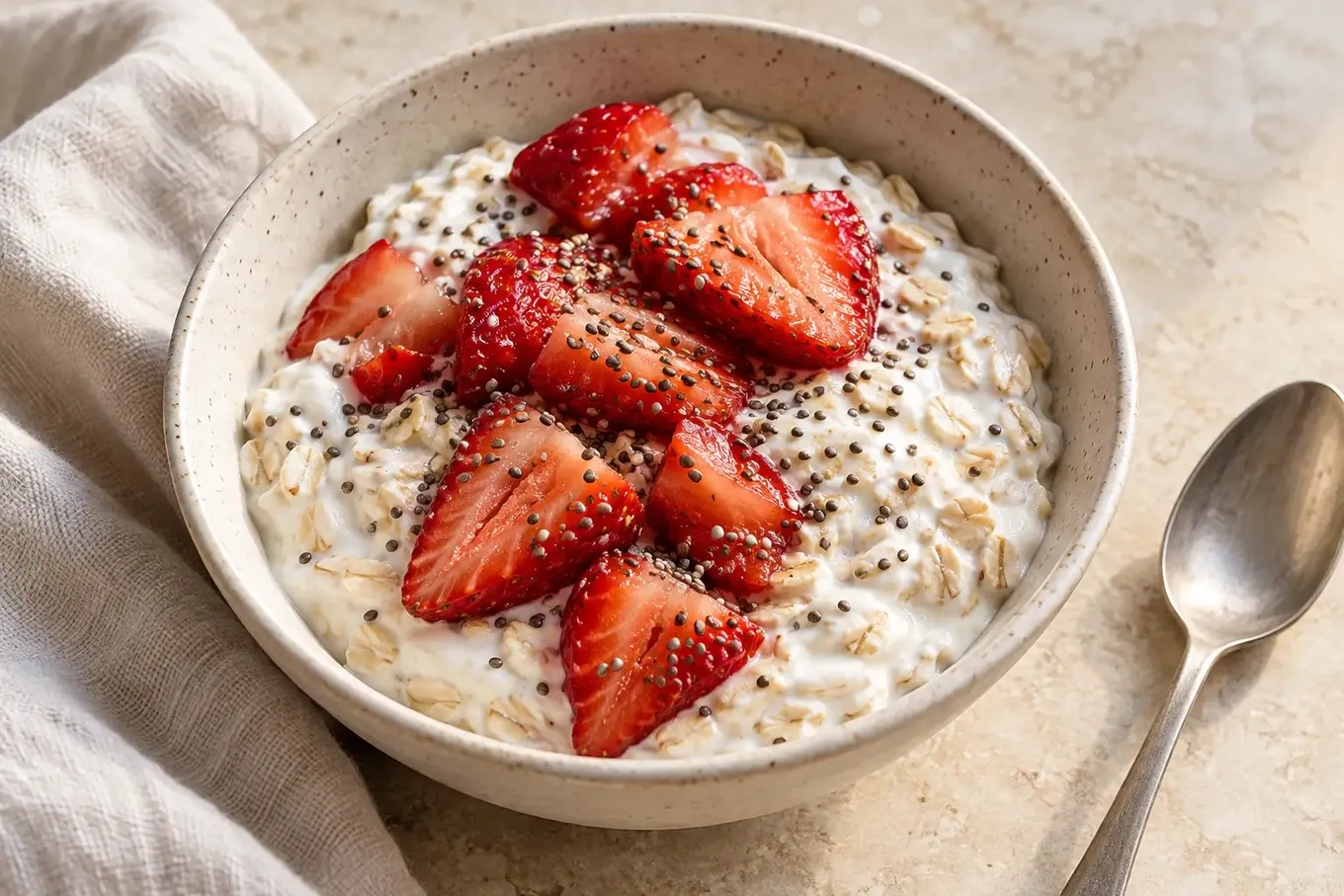
1. Berry Yogurt Oat Bowl
Cold, creamy, and ready without turning on the stove. This is a good place to start if breakfast currently means whatever you can find beside the coffee machine.
One serving · About 5 minutes · Approximately 28 g protein and 350 calories
What you'll need
- 200 g plain nonfat Greek yogurt
- 40 g rolled oats
- 100 g strawberries, washed and sliced
- 10 g chia seeds
How to make it
- Stir the oats into the yogurt in a breakfast bowl.
- Top with the strawberries and chia seeds. Add a splash of water if you prefer a looser texture.
- For softer oats, mix the yogurt and oats the night before, cover, and refrigerate. Add the toppings in the morning.
Make it yours: Blueberries or sliced peaches work in place of strawberries. Regular yogurt is fine if that is what you have, but it will not necessarily provide the same protein as Greek yogurt.
Allergen check: Milk. For gluten-free eating, choose certified gluten-free oats and check the other ingredient labels.
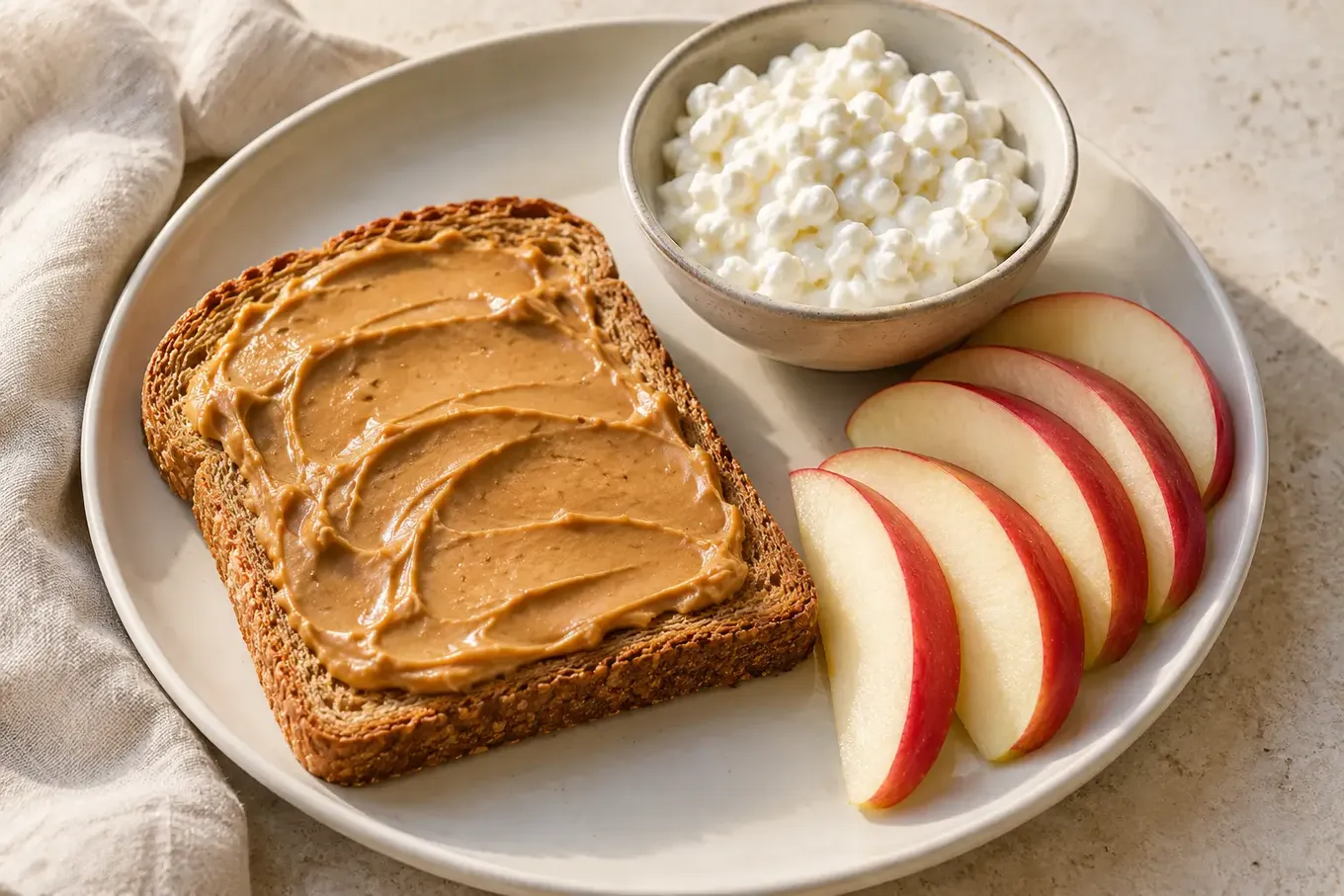
2. Apple Cottage Cheese Toast
Think peanut butter toast with something creamy alongside it, rather than trying to balance an entire bowl of cottage cheese on one slice.
One serving · About 5–7 minutes · Approximately 26 g protein and 370 calories
What you'll need
- 180 g 2% cottage cheese
- 40 g whole-wheat bread
- 120 g apple with skin, cored
- 10 g smooth peanut butter
How to make it
- Toast the bread and spread it with the peanut butter.
- Slice the apple and spoon the cottage cheese into a small bowl.
- Serve everything together. Add a small pinch of cinnamon if you like.
Prefer a smoother texture? Blend the cottage cheese before serving.
Make it yours: Replace peanut butter with sunflower seed butter if appropriate for your allergies, checking the label for cross-contact. The nutrition will change with the spread.
Allergen check: Milk, wheat, and peanuts.
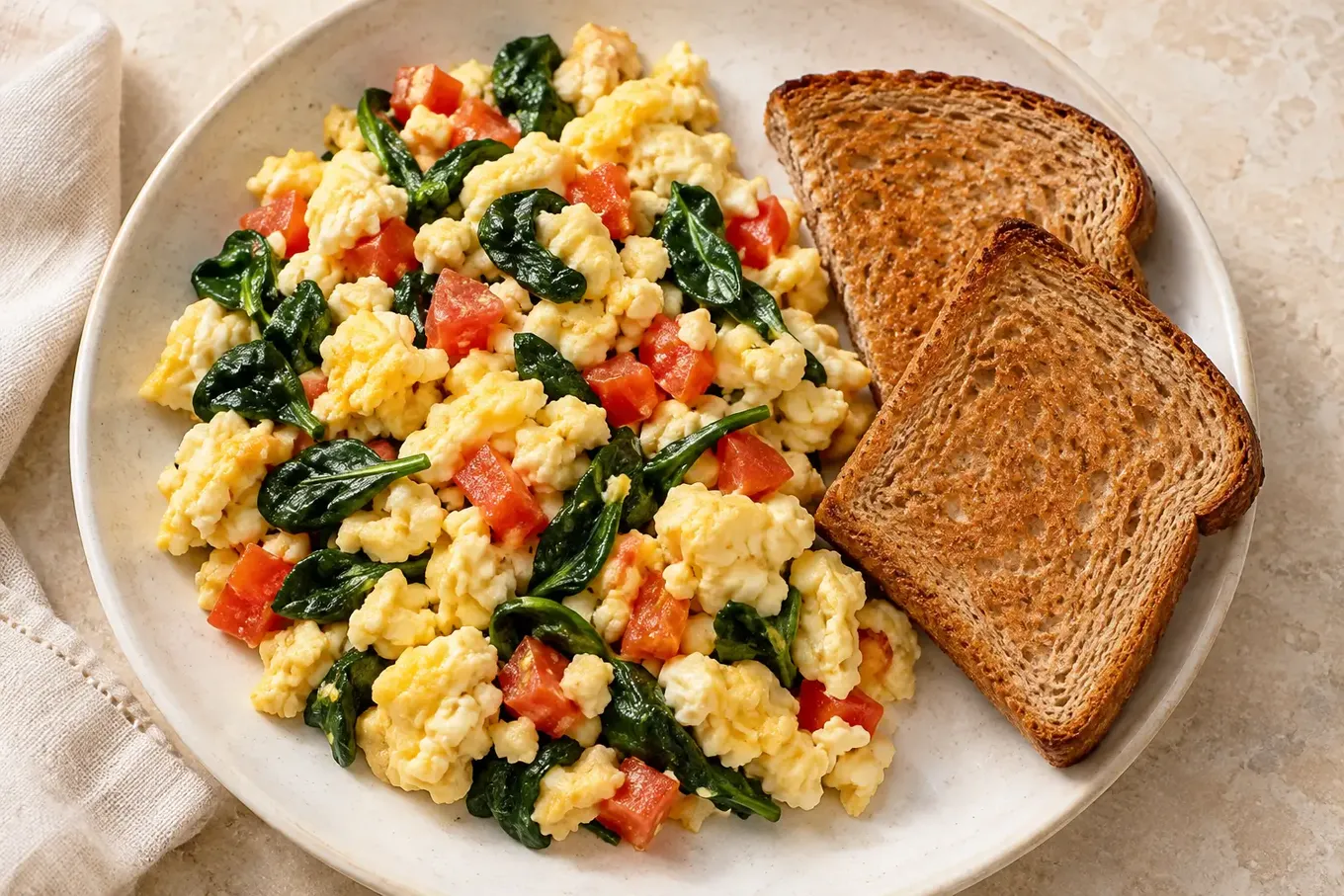
3. Spinach Egg Scramble and Toast
One whole egg brings the familiar flavor; egg whites make it easy to add protein without cooking a bigger pile of whole eggs.
One serving · About 10–12 minutes · Approximately 26 g protein and 340 calories
What you'll need
- 1 large egg, about 50 g without its shell
- 100 g egg whites
- 30 g spinach
- 100 g tomato, chopped
- 5 g olive oil, about 1 teaspoon
- 60 g whole-wheat bread
How to make it
- Whisk the egg and whites together. Start toasting the bread.
- Warm the oil in a nonstick skillet over medium heat. Soften the tomato, then add the spinach and stir until wilted.
- Pour in the eggs and gently stir until cooked through, with no liquid egg remaining. Serve with the toast.
Make it yours: Carton egg whites are convenient; follow their storage instructions. If you use whole eggs instead of whites, adjust the number to your preference and recalculate the estimate rather than treating them as nutritionally identical.
Allergen check: Egg and wheat.
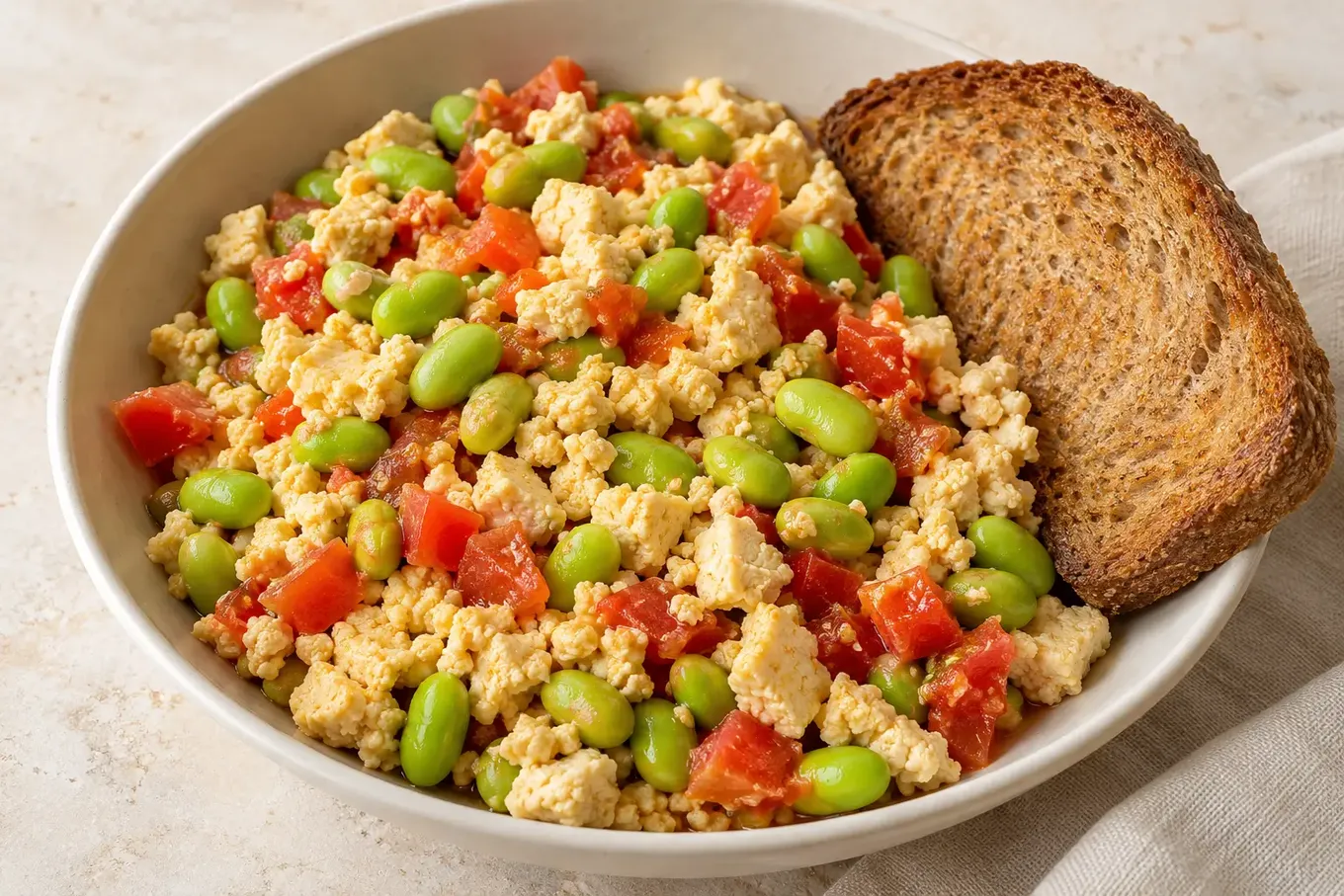
4. Tofu Edamame Skillet
This savory option skips both eggs and dairy. The edamame adds a different texture, so it feels like a breakfast in its own right rather than an imitation scramble.
One serving · About 10–15 minutes with prepared edamame · Approximately 32 g protein and 400 calories
What you'll need
- 100 g firm tofu, drained
- 75 g cooked, shelled edamame
- 100 g tomato, chopped
- 5 g olive oil, about 1 teaspoon
- 40 g whole-wheat bread
How to make it
- If using frozen edamame, cook it according to the package before weighing the shelled portion. Toast the bread.
- Warm the oil in a skillet. Crumble in the tofu and cook for a few minutes, stirring occasionally.
- Add the tomato and prepared edamame. Stir until hot throughout, then serve with the toast. Pepper or a small pinch of smoked paprika is optional.
Check the tofu label: The calculation uses a firm tofu entry with about 17 g protein per 100 g. Some tofu brands contain much less, even when labeled firm. Use your package's figures if you want a closer estimate.
Allergen check: Soy and wheat. Gluten-free bread can replace the toast; check its label and nutrition.
5. Banana Overnight Oats
Prepare the base after dinner, add the banana in the morning, and breakfast is waiting when you are.
One serving · About 5 minutes of preparation, plus overnight refrigeration · Approximately 25 g protein and 390 calories
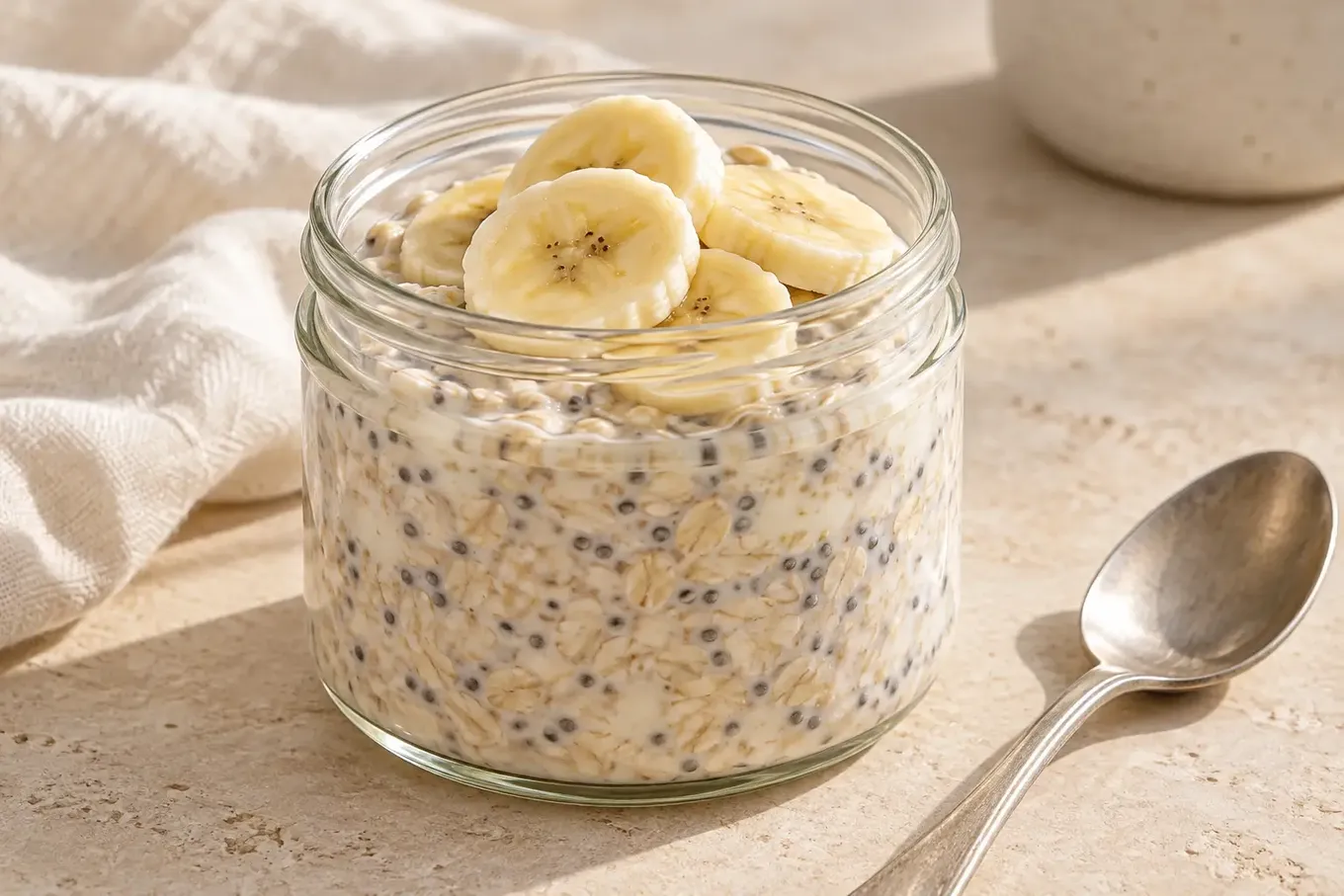
What you'll need
- 170 g plain nonfat Greek yogurt
- 40 g rolled oats
- 100 g banana, weighed without its peel
- 10 g chia seeds
- 80–120 mL water
How to make it
- Mix the yogurt, oats, chia, and water in a lidded container, leaving a little room to stir.
- Cover and refrigerate overnight.
- Stir in the morning and loosen with a splash of water if needed. Top with the sliced banana; a small pinch of cinnamon is optional.
Make it yours: Use lactose-free Greek yogurt if that suits you better, checking the protein on the label. A plant-based yogurt is another option, but many are much lower in protein; do not carry over the same estimate.
Allergen check: Milk. Use certified gluten-free oats if needed.
6. Peanut Butter Banana Smoothie
The protein comes mostly from Greek yogurt, not a supplement. Oats and peanut butter give the smoothie more substance than a glass of blended fruit.
One serving · About 5 minutes · Approximately 29 g protein and 400 calories
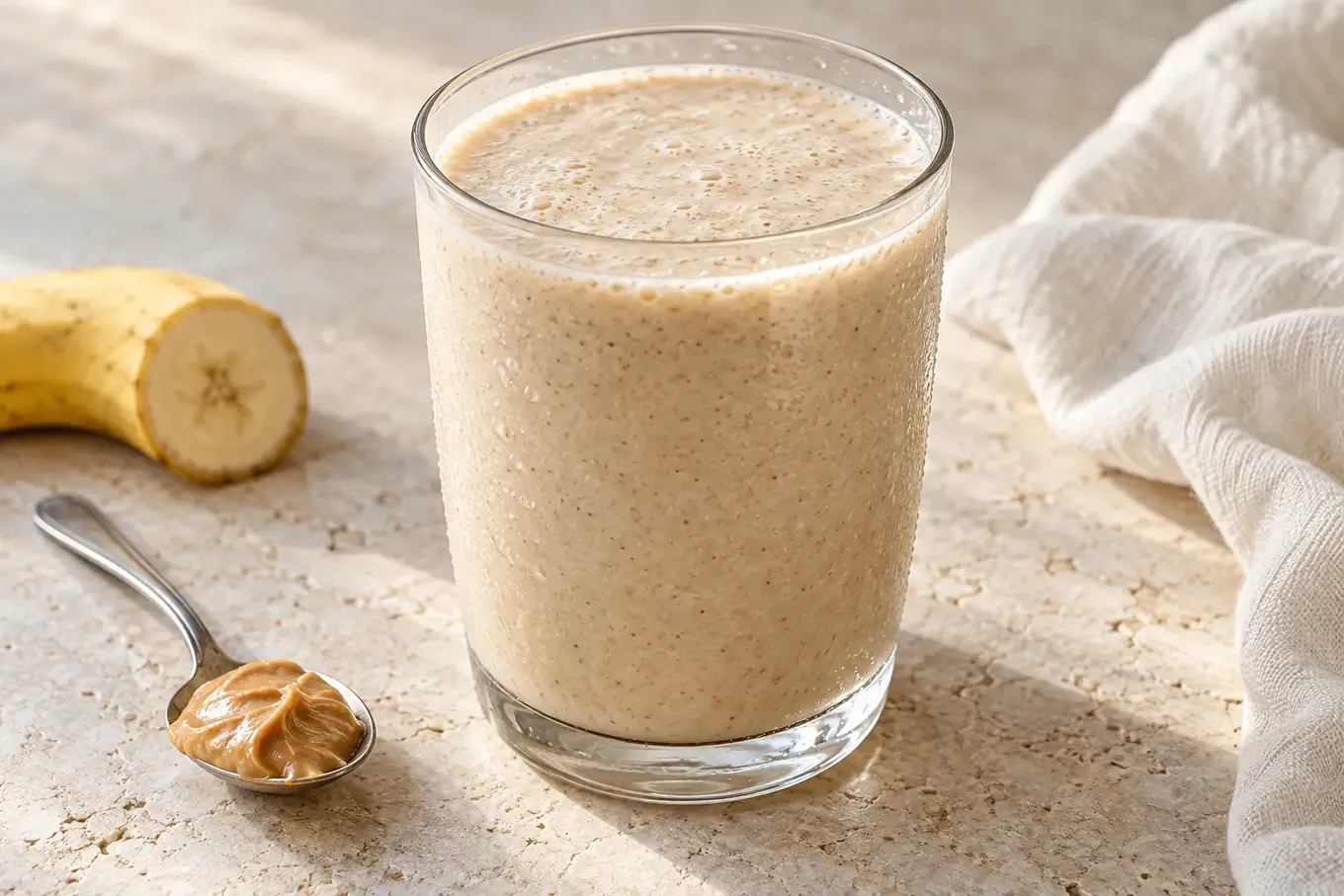
What you'll need
- 200 g plain nonfat Greek yogurt
- 100 g banana, weighed without its peel
- 20 g smooth peanut butter
- 20 g rolled oats
- 100–150 mL water, plus ice if you like
How to make it
- Add the yogurt, banana, peanut butter, oats, and 100 mL water to a blender.
- Blend until smooth, adding more water if needed.
- Pour into a glass and serve. Frozen banana makes a thicker smoothie; fresh banana works too.
Make it yours: If you prefer chewing your breakfast, turn this into a bowl: leave out most of the water, slice the banana, and stir the oats into the yogurt. Use an allergy-appropriate alternative to peanut butter if necessary.
Allergen check: Milk and peanuts. Check oats for gluten-free suitability when relevant.
7. Savory Cottage Cheese Oats
Oats do not have to taste like dessert. This version is closer to a soft breakfast grain bowl, with spinach and an egg on top.
One serving · About 10–15 minutes · Approximately 25 g protein and 330 calories
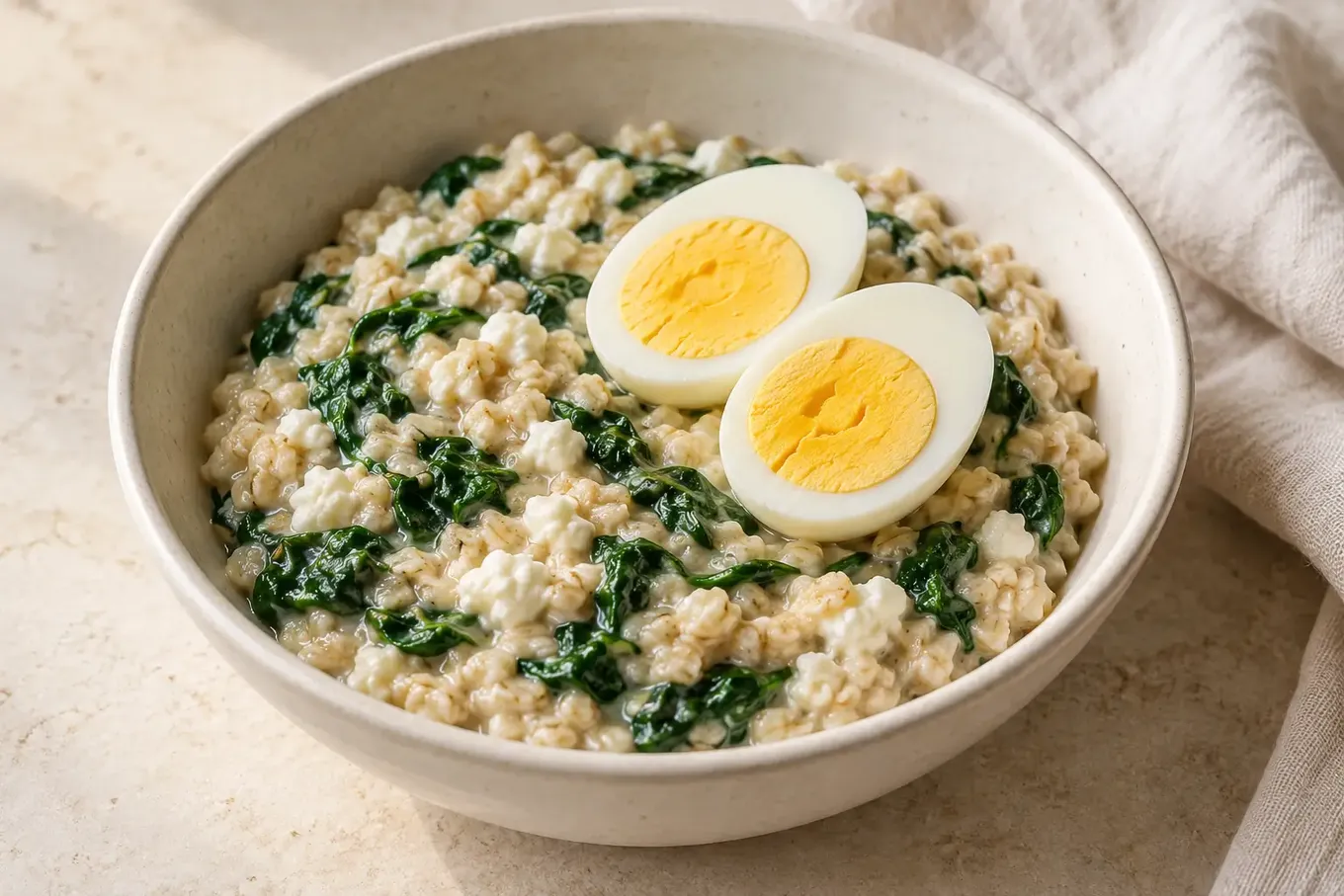
What you'll need
- 40 g rolled oats
- 120 g 2% cottage cheese
- 1 large egg, about 50 g without its shell
- 30 g spinach
- About 200 mL water, adjusted to the oat package directions
How to make it
- Simmer the oats in water according to the package directions. Meanwhile, boil the egg until its white and yolk are firm.
- Add the spinach to the oats near the end and cook until wilted. Stir in the cottage cheese.
- Peel and halve the egg, then place it on top. Season with pepper if you like.
Make it yours: Use an already hard-boiled egg to shorten the morning preparation. If you want a richer bowl, add olive oil or another topping; it is not included in this version's estimate.
Allergen check: Milk and egg. Choose certified gluten-free oats if needed.
8. Black Bean Egg Toast
A useful reason to keep a portion of cooked beans in the fridge. You can serve the beans beside the toast if you would rather not build a towering open sandwich.
One serving · About 10 minutes with cooked beans · Approximately 27 g protein and 440 calories
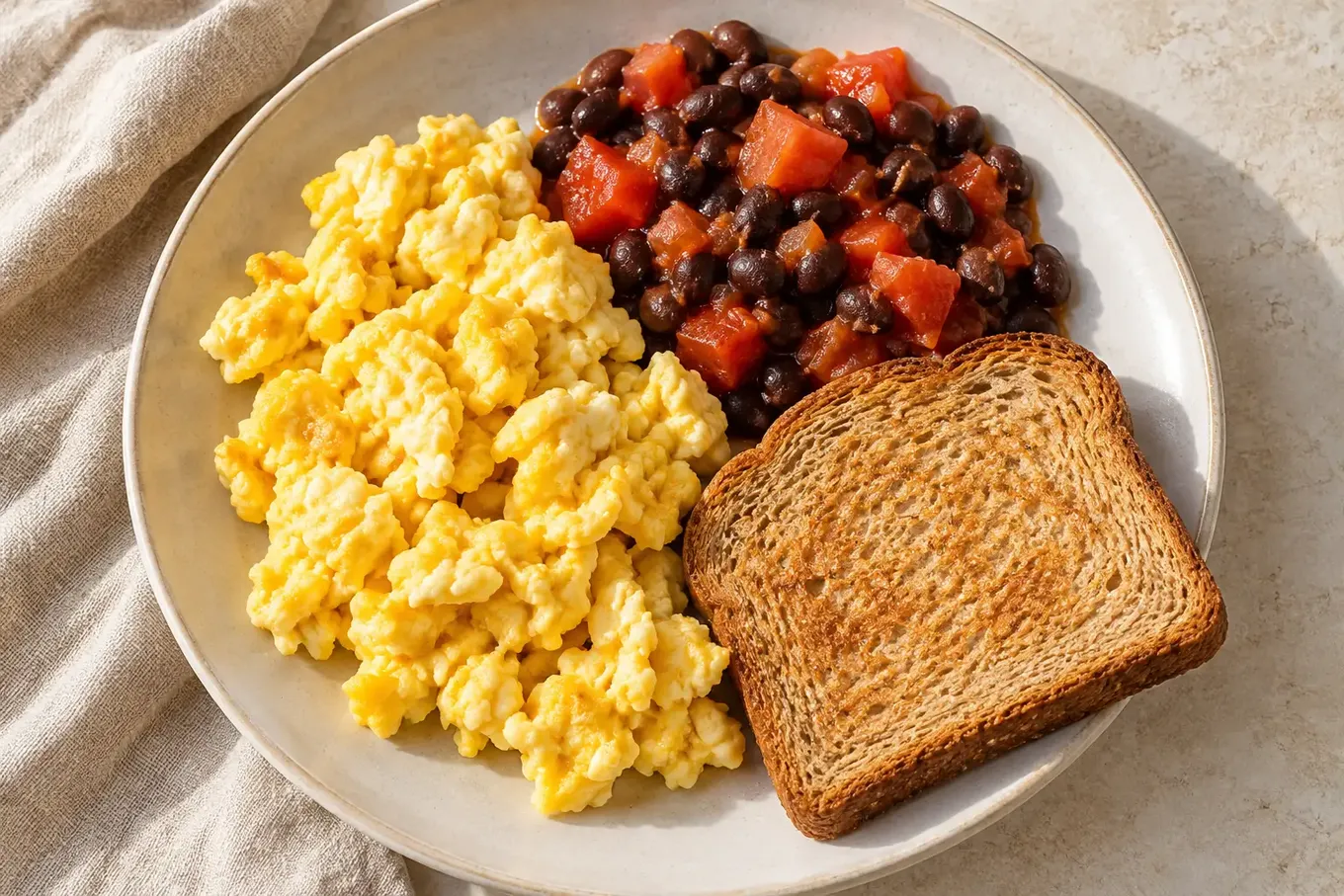
What you'll need
- 100 g cooked, drained black beans
- 2 large eggs, about 100 g without their shells
- 100 g tomato, chopped
- 5 g olive oil, about 1 teaspoon
- 40 g whole-wheat bread
How to make it
- Warm the beans and tomato in a small saucepan with a splash of water. Toast the bread.
- Whisk the eggs. Heat the oil in a skillet and scramble the eggs until cooked through.
- Serve the beans and eggs with the toast, either alongside it or spooned on top. A small pinch of cumin is optional.
Make it yours: Canned beans are convenient; drain and rinse them. The estimate uses unsalted boiled beans, so your can's nutrition may differ. Pinto beans also work, with a different calculation.
Allergen check: Egg and wheat.
9. Egg Muffins with Toast and Berries
These take longer to prepare, but make four breakfasts. The time-saving part comes on the mornings afterward.
Four servings · About 15 minutes preparation plus 25–30 minutes baking · Per serving: approximately 30 g protein and 420 calories, including toast and berries
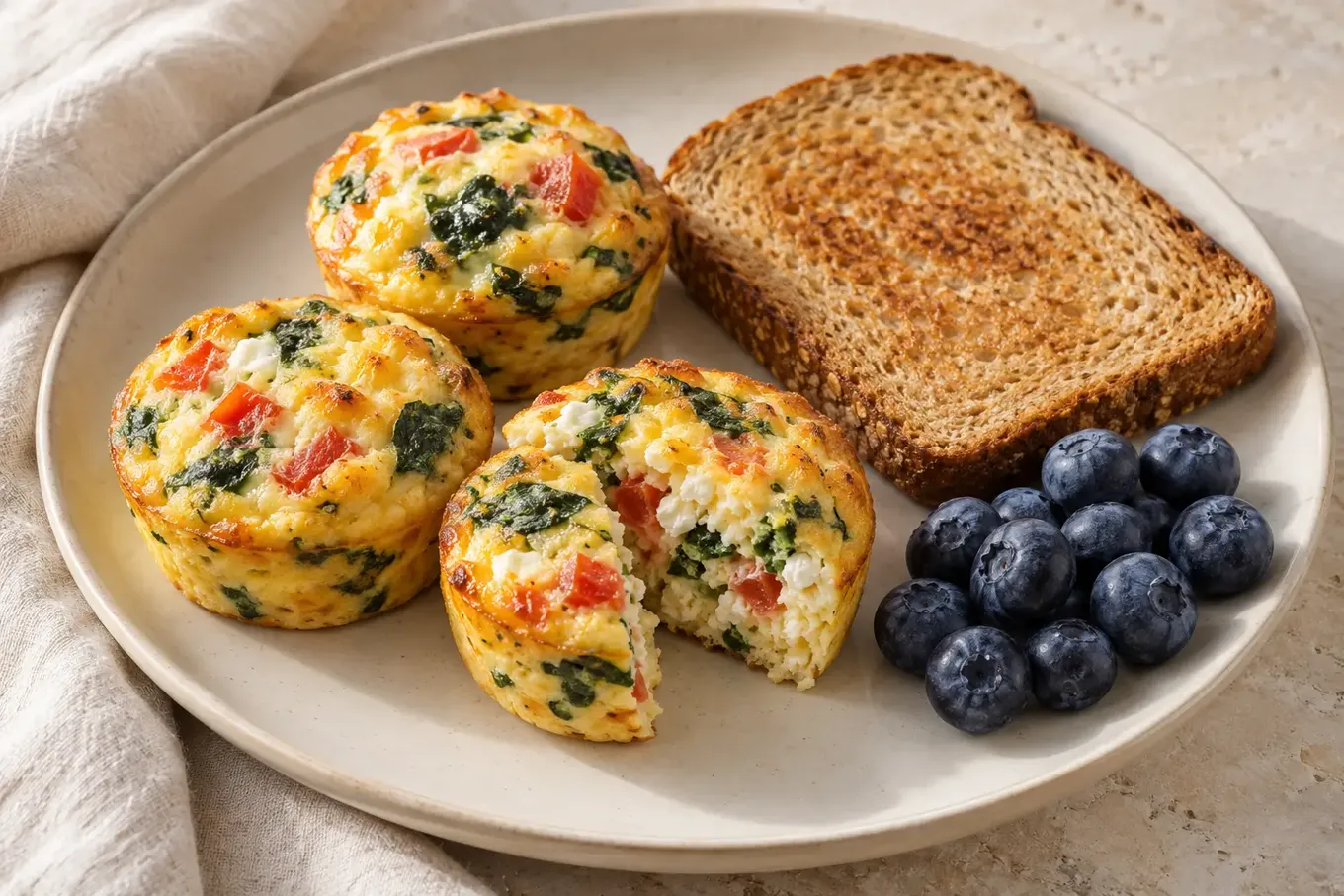
What you'll need for four breakfasts
- 8 large eggs, about 400 g without their shells
- 400 g 2% cottage cheese
- 120 g spinach, chopped
- 200 g tomato, finely chopped
- 10 g olive oil for greasing the tin
- 160 g whole-wheat bread, to serve
- 400 g blueberries, to serve
How to make them
- Heat the oven to 350°F (175°C). Grease a 12-cup muffin tin with the measured oil.
- Whisk the eggs and cottage cheese. Stir in the vegetables and divide evenly among the cups. Leave room at the top; use an additional oven-safe dish if needed rather than overfilling.
- Bake for about 25–30 minutes. Check the center with a food thermometer: it should reach 160°F (71°C), the safe temperature for egg dishes. Tin sizes and ovens vary, so temperature matters more than the timer.
- Divide the entire cooked batch into four equal portions. If you made 12 equal muffins, that is three muffins per breakfast. Serve each portion with 40 g bread and 100 g blueberries.
The per-serving nutrition includes the bread and berries, not just the muffins. Extra oil for an additional dish changes the estimate.
Make it yours: Keep the fruit and bread separate until serving. Reheat refrigerated muffins to 165°F (74°C). See the storage guidance below before preparing the batch.
Allergen check: Egg, milk, and wheat.
10. Egg Yogurt Breakfast Plate
No elaborate recipe, just a few foods that work together. Keep an egg ready in the fridge and the only morning cooking is toast.
One serving · About 5 minutes with an already hard-boiled egg; allow extra time if cooking it fresh · Approximately 30 g protein and 360 calories
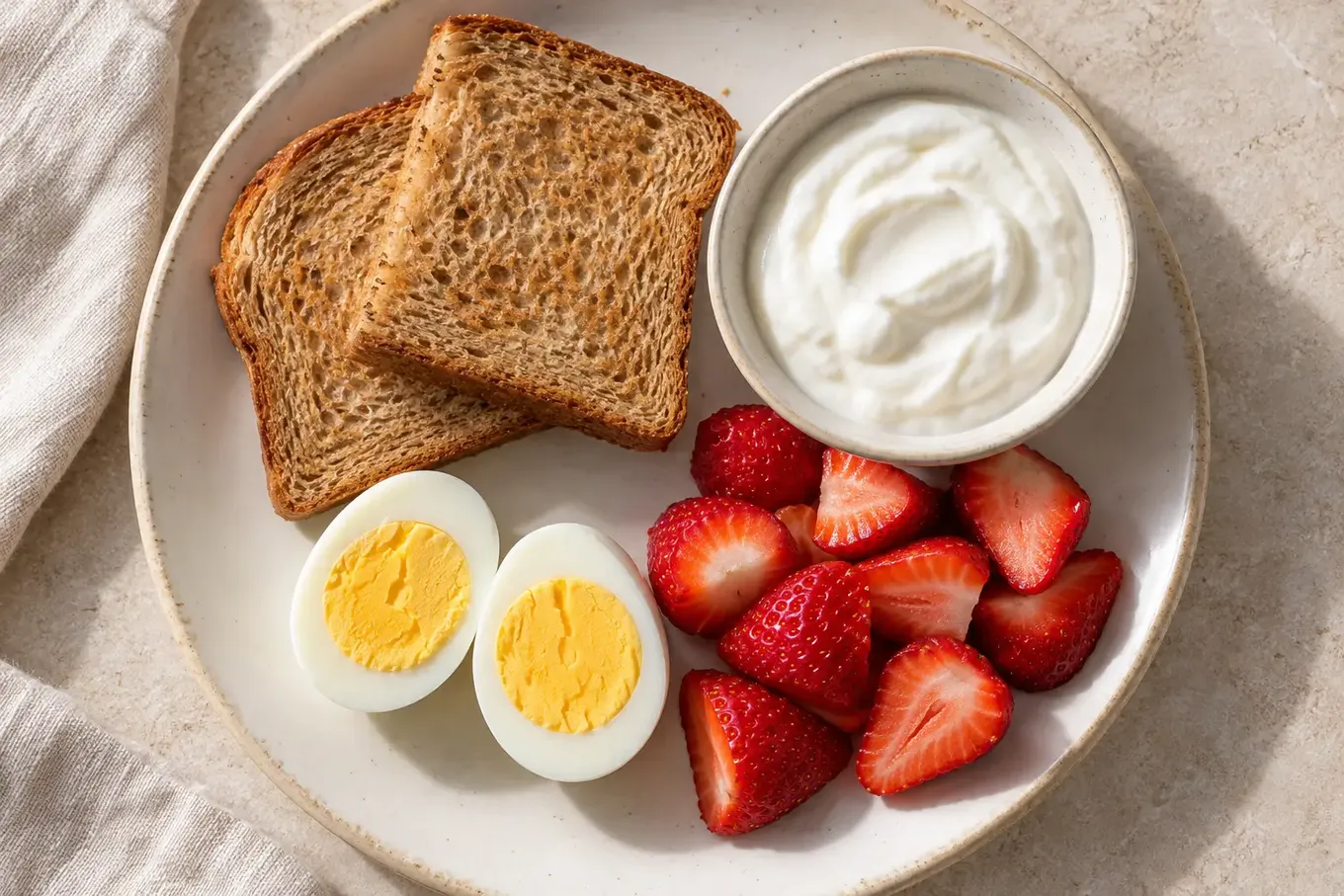
What you'll need
- 1 large egg, about 50 g without its shell
- 150 g plain nonfat Greek yogurt
- 60 g whole-wheat bread
- 150 g strawberries, washed
How to put it together
- Toast the bread and peel your hard-boiled egg. If cooking the egg fresh, boil it until the white and yolk are firm.
- Spoon the yogurt into a small bowl and slice the strawberries if you prefer.
- Arrange everything on a plate. Butter, jam, or other toppings are additional to the nutrition estimate.
Make it yours: This is an assembly template, so use a fruit you enjoy. It also packs well if you can keep the egg and yogurt cold during transport.
Allergen check: Egg, milk, and wheat.
Make Breakfast Easier Without Spending Sunday in the Kitchen
Choose one no-cook option and one warm option. Buy the ingredients they share, rather than shopping for all ten. Yogurt, oats, eggs, and a fruit you enjoy can cover several mornings with very little extra preparation.
Before a busy week, wash the fruit, portion dry oats, or cook a few eggs. Leave the final choice open: the yogurt can become a bowl, overnight oats, or a smoothie depending on the morning.
Keep food safety part of the plan. FoodSafety.gov recommends a refrigerator at 40°F (4°C) or below and refrigerating perishable food within two hours—or one hour above 90°F (32°C). Refrigerate cooked food promptly in shallow containers; do not leave it out to cool for hours. Use an insulated bag with cold packs when taking dairy or eggs out for the morning.
For egg muffins, follow the 3–4-day refrigerated storage guidance for cooked egg dishes. Hard-boiled eggs keep for up to one week refrigerated. Follow ingredient use-by dates and package instructions too. For overnight oats, prepare a small batch rather than assuming every yogurt-and-fruit mixture lasts an entire week.
How Much Protein Do You Need at Breakfast?
There is no single breakfast number everyone needs to reach. These combinations happen to provide around 25–32 g per reference serving; that is a description of the recipes, not a prescription.
If you want some context for your overall day, Shelog's protein intake calculator compares adult daily protein reference values using your entered details. Its activity-based ranges are illustrative, not a personalized prescription. Use the explanations to understand the numbers—not to set a required target for every meal or automatically aim for the highest result.
If you have a condition that affects your dietary needs, are pregnant or breastfeeding, or have been given a specific nutrition plan, get individualized guidance rather than using a generic breakfast list to set your target.
Are High-Protein Breakfasts Good for Weight Loss?
They can fit into a weight-management plan, but none of these meals is a fat-burning breakfast. Adding breakfast is not automatically a weight-loss strategy: a systematic review of randomized trials did not establish a weight-loss benefit from doing so. The studies were short and generally low quality, and the finding does not tell us what every individual should eat.
Use these ideas if breakfast fits your day. You do not need to choose the lowest-calorie row or force yourself to eat at a particular hour because a list says you should. The useful question is whether the meal works for your appetite, preferences, and overall eating pattern.
Turn One Good Idea into a Breakfast You Can Repeat
Once you have a few favorites, Shelog can help with the practical next step. Food search lets you record the ingredients you used; Premium's Protein Helper offers meal and snack suggestions when you want more options. Premium's Snap & Describe can also help you start a food entry from a photo or description—review the ingredients and amounts, since a photo cannot establish exact nutrition.
You do not have to record every breakfast. If logging is useful to you, check your own yogurt, tofu, and bread labels rather than assuming they match the generic figures here. The goal is a breakfast that fits your life, not another morning task to get perfectly right.
Download Shelog to explore food logging and protein-planning features.
Sources
This article is for general education and is not a substitute for personal medical or nutrition advice.
More From Shelog
Keep Reading
Nutrition Basics
How Many Calories Are in a Pound of Body Fat? Why 3,500 Is an Estimate
6 min read
Nutrition Basics
Net Calories vs Total Calories: Which Number Should You Actually Use?
8 min read
Nutrition Basics
Do You Burn More Calories on Your Period? What Actually Changes Across Your Cycle
10 min read
Take Shelog with you
Take Shelog with you
Shelog turns the ideas in this article into a simple daily diary—food, mood, movement, and weight in one calm place.