

Zepbound and Muscle Loss: What the Research Actually Shows
Worried about muscle loss on Zepbound? Understand the research, how lean mass differs from muscle, and where food records and strength training fit.
Shelog Editorial
Reviewed for clarity and care

Your clothes fit a little more loosely, and the scale is moving down. Then you read about muscle loss on Zepbound and wonder: how much of that change is fat, and what should you be doing for your strength?
Weight loss during tirzepatide treatment can include a reduction in lean mass. But lean mass is not the same as skeletal muscle, and a study average cannot tell you what has happened to your own strength. If you are concerned, a review of your meals, activity, and how you feel is a useful place to start with your healthcare team.
Zepbound contains tirzepatide, which acts on both GIP and GLP-1 receptors. It is often grouped with GLP-1 medications, but research findings for semaglutide or another drug do not automatically apply to it. Zepbound prescribing information.
What Did the Tirzepatide Study Actually Measure?
The SURMOUNT-1 body-composition substudy analyzed DXA scans from 160 adults with obesity or overweight without type 2 diabetes.
By week 72, average lean mass had fallen 10.9% with tirzepatide, compared with 2.6% with placebo. Roughly three-quarters of the weight lost was fat and one-quarter was lean mass in both groups. That does not mean participants lost one-quarter of their starting muscle. It describes the composition of the weight lost. Read the original study.
DXA lean mass includes muscle but also other soft tissues and water; it excludes bone mineral. The substudy did not directly establish how much skeletal muscle each person lost. It also did not evaluate how individual nutrient intake or activity related to the scan results. Eli Lilly funded the work.
Muscle Size, Composition, and Strength Are Different Questions
Another tirzepatide study, SURPASS-3 MRI, examined thigh muscle in adults with type 2 diabetes over 52 weeks. It found reduced muscle volume alongside reduced fat infiltration within muscle. Volume changes broadly followed the relationship expected with changes in body weight. This was an exploratory analysis funded by Eli Lilly, in a different population from SURMOUNT-1. Read the study abstract.
These findings help explain why muscle health cannot be summed up by a single number. Changes in muscle volume, fat within muscle, and strength are different outcomes. Neither study lets you calculate your own muscle loss from your bathroom scale.
If you are concerned, ask your clinician which assessments would be useful for you. A body-composition measurement and a discussion of everyday function may answer different parts of that question.
Looking After Muscle Takes More Than a Protein Target
The 2025 joint nutrition advisory from four professional societies emphasizes that increasing protein alone is unlikely to preserve muscle without structured resistance training. It also recommends tailoring activity to a person's fitness and physical capacity. Joint advisory, nutrition and exercise guidance.
You do not need to start with the heaviest weights in the gym. The first step is finding strength work you can do safely and regularly.

For general adult health, the CDC recommends muscle-strengthening activity on at least two days each week, working all major muscle groups, alongside aerobic activity. This is a public-health baseline, not a Zepbound-specific program or a guarantee against muscle loss.
If you are new to training, returning after a long break, or dealing with pain or weakness, ask for help choosing a suitable starting point. Discuss equipment you feel comfortable using, how to build up gradually, and what to do when symptoms interrupt your routine.
What If Eating Enough Has Become Difficult?
Perhaps you feel full after a few bites of a lunch you used to finish. Or a food you relied on for protein no longer appeals to you. Tell your dietitian what has changed, especially if it is happening often. You do not have to force yourself through a meal you cannot tolerate.
The joint advisory discusses small, nutrient-dense protein foods and accommodating changing preferences. Options include eggs, yogurt, fish, and other foods that fit your needs and tolerance. Your overall intake matters, too; protein should not become a reason to keep cutting everything else. Read the dietary guidance.
For help understanding the different targets you may see online, our guide to protein needs during GLP-1 treatment explains why there is no single number for everyone. If you have kidney disease or a prescribed protein restriction, check with your clinician before increasing your intake.
Before your appointment, note the meals you actually finished, foods you left, and symptoms that made eating difficult. “I stop halfway through lunch most days” gives your dietitian more to work with than “I should probably eat better.”
Pay Attention to How Everyday Tasks Feel
It is worth mentioning if carrying groceries, standing from a chair, or your familiar workout has become noticeably harder. Those observations do not diagnose muscle loss, but they give your clinician something specific to investigate.
Do not assume that feeling tired or weak means you need to train harder. The Zepbound safety information lists fatigue and warns about dehydration-related kidney problems and low blood sugar, particularly with certain diabetes medications. Symptoms need context, not a self-diagnosis from a food diary.
Contact your prescriber if you are repeatedly unable to eat enough or notice persistent weakness. Seek prompt medical advice if vomiting or diarrhea persists or you cannot keep fluids down. Severe or persistent abdominal pain also needs urgent assessment. Medication changes should be handled with your prescriber, not worked out from an online muscle-loss checklist.
How Shelog Can Help You Review Your Eating Patterns
At a nutrition appointment, it can be hard to remember which meals you finished last week—especially if your appetite has been changing.
Shelog gives you a place to keep those food records. Its new food analysis shows recurring mixes of protein, carbohydrate, and fat across recorded days, with a breakfast, lunch, and dinner comparison. That wider view can help you choose which meals to revisit.
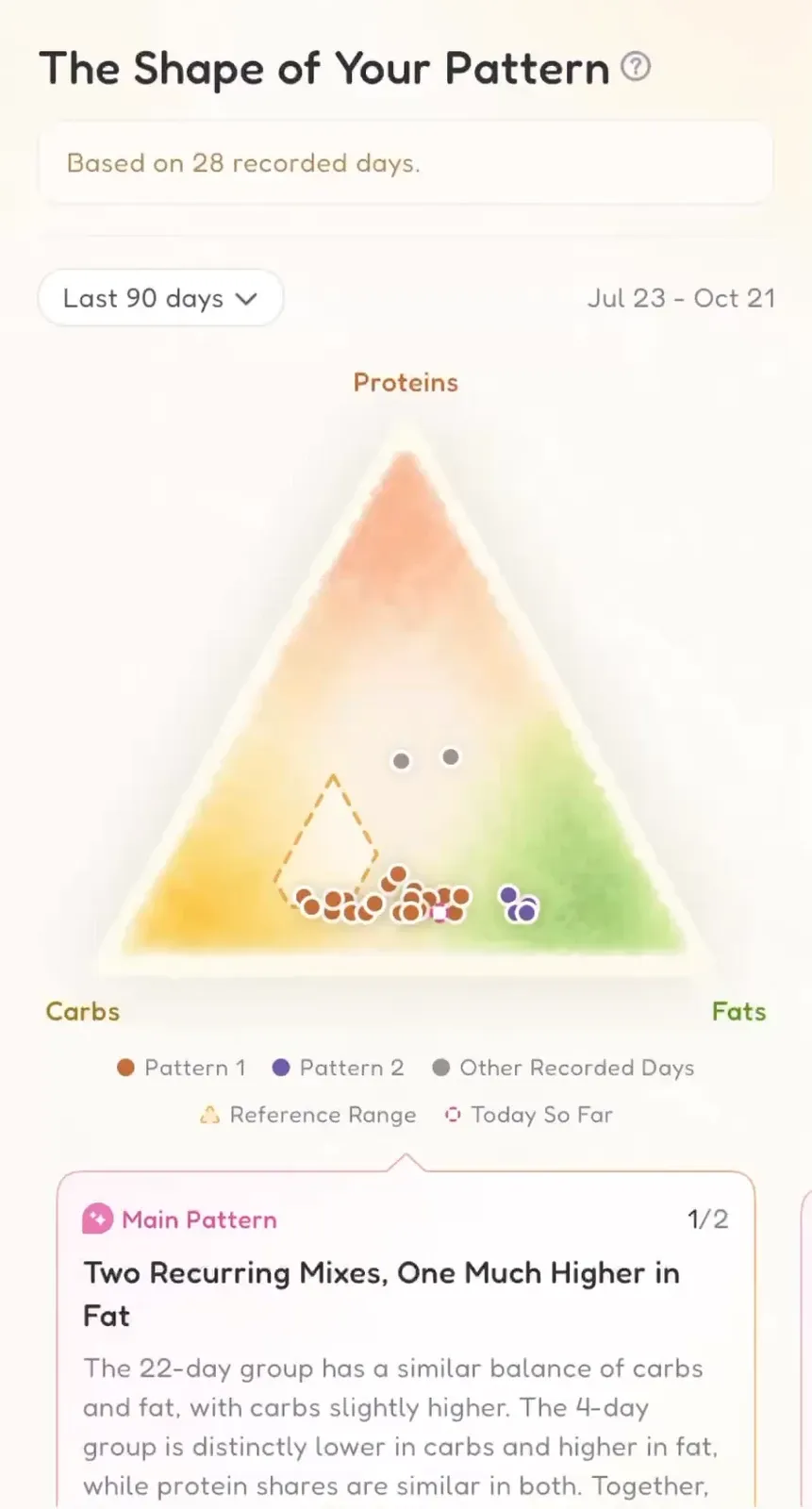
For example, if breakfast repeatedly looks different from your other meals, revisit those entries. Check what you logged, how much you finished, and which foods provided protein. You may find a small adjustment to discuss with your dietitian, or simply understand your routine a little better.
The pattern display uses calorie shares, not protein grams. To compare your intake with an agreed protein target, review the food entries themselves and check for missing meals, too.
Shelog does not measure muscle mass, diagnose a deficiency, or establish that you have preserved muscle. Its value here is helping you look back with more detail, so a nutrition conversation can start with your real routine.
If you would like to organize your meals and explore your recorded eating patterns, download Shelog. Use it alongside professional nutrition and treatment advice, rather than as a test of whether Zepbound is working.
Common Questions About Zepbound and Muscle Loss
Does everyone taking Zepbound lose the same amount of muscle?
No. Discuss your own concerns and changes in function with your clinician rather than treating a study average as your personal result.
Should I stop Zepbound if I am worried about muscle loss?
Bring the concern to your prescriber so you can review the benefits, symptoms, nutrition, and activity together. This article cannot determine whether you should continue or change treatment.
You can want the benefits of treatment and still ask how to look after your strength. Both belong in the conversation.
Sources
- Look et al. (2025): SURMOUNT-1 body-composition substudy
- Sattar et al. (2025): SURPASS-3 MRI analysis, abstract
- 2025 joint advisory: Nutritional priorities to support GLP-1 therapy for obesity
- CDC: Adult Activity Overview
- Zepbound prescribing information and Medication Guide
This article provides general education for adults. It is not a diagnosis, an individualized nutrition or exercise prescription, or advice to change medication.
This article is for general education and is not a substitute for personal medical or nutrition advice.
Take Shelog with you
Take Shelog with you
Shelog turns the ideas in this article into a simple daily diary—food, mood, movement, and weight in one calm place.