

How to Lose a Stone Safely: A Real-Life UK Guide for Women
Want to lose a stone without handing your life over to a crash diet? Build a realistic UK plan for meals, movement, weekends, and steady progress.
Shelog Editorial
Reviewed for clarity and care

Perhaps the idea appeared while you were getting dressed. Perhaps a GP appointment put a number in your head. Or perhaps “lose a stone” simply sounds satisfyingly tidy—one clear project, preferably finished before the next wedding, holiday, or mysterious event that requires an outfit.
One stone is about 6.35 kilograms. If losing it is appropriate for you, a common NHS reference of 0.5 to 1 kilogram per week puts the arithmetic at roughly 6 to 13 weeks. Real bodies rarely produce such a neat straight line, so treat that as a general range, not a collection date.
The plan also needs to work on rainy Tuesdays, Friday drinks, the week your period turns up, and evenings when cooking feels wildly ambitious. Here is how to make it fit real life.
A stone is a unit, not a verdict. First decide whether weight loss is right for you; then choose a pace that lets you keep living.
First: Is Losing a Stone the Right Goal?
One stone does not mean the same thing in every body. It is 10% of body weight for someone who weighs 10 stone, but 5% for someone who weighs 20 stone. Those figures are simply maths—not recommendations.
Before choosing a deadline, ask:
- Would losing a stone still leave me at an appropriate weight for my health and build?
- Am I doing this for comfort, health, or function—or because one photograph ruined my Tuesday?
- Can I eat enough, recover from exercise, and still have a social life while pursuing it?
- Would improving strength, regular meals, sleep, or a health marker be a better goal right now?
The NHS healthy-weight guidance suggests checking whether weight loss is appropriate and making manageable changes rather than overhauling everything at once. BMI is only one screening measure; your circumstances matter too.
A general online guide is not suitable for children or teenagers, pregnancy, breastfeeding, eating-disorder recovery, or anyone who is underweight. If a health condition or medicine affects your weight, appetite, digestion or nutrition, speak with a GP or registered dietitian before trying to lose weight.
How Long Does It Take to Lose a Stone?
Using the NHS general reference of 0.5 to 1 kilogram per week, the simple arithmetic is just over 6 to around 13 weeks. A gentler average could take longer, and that is not automatically a problem.
| Average change | Time to lose one stone | How to read it |
|---|---|---|
| 0.25 kg per week | About 25 weeks | Slow progress can still be useful progress |
| 0.5 kg per week | About 13 weeks | Lower end of the NHS general range |
| 1 kg per week | Just over 6 weeks | Upper end and not suitable for everyone |
This is arithmetic, not a promise. Your starting weight, activity, health, medication and chosen approach can all change the timeline.
Can you lose a stone in a month?
Doing so would require an average scale change of about 1.6 kilograms per week. That is faster than the NHS general range. A large early drop can include water and stored carbohydrate, so a dramatic first week does not establish a safe four-week fat-loss rate.
NICE guidance says low-energy and very-low-energy diets should only be used within specialist services for specific clinical needs, with supervision and support; they are not a long-term strategy. A holiday countdown is not a clinical programme.
If your deadline is four weeks away, keep the occasion and loosen the number. Four weeks is enough time to establish calmer meals, walk more or restart strength training. It does not need to become an audition for the smallest possible lunch.
Build a Plan Around the Week You Actually Have
The most convincing plans are often written for an imaginary woman. She meal-preps cheerfully on Sunday, has no commute, never receives a birthday invitation, and apparently owns seventeen matching glass containers.
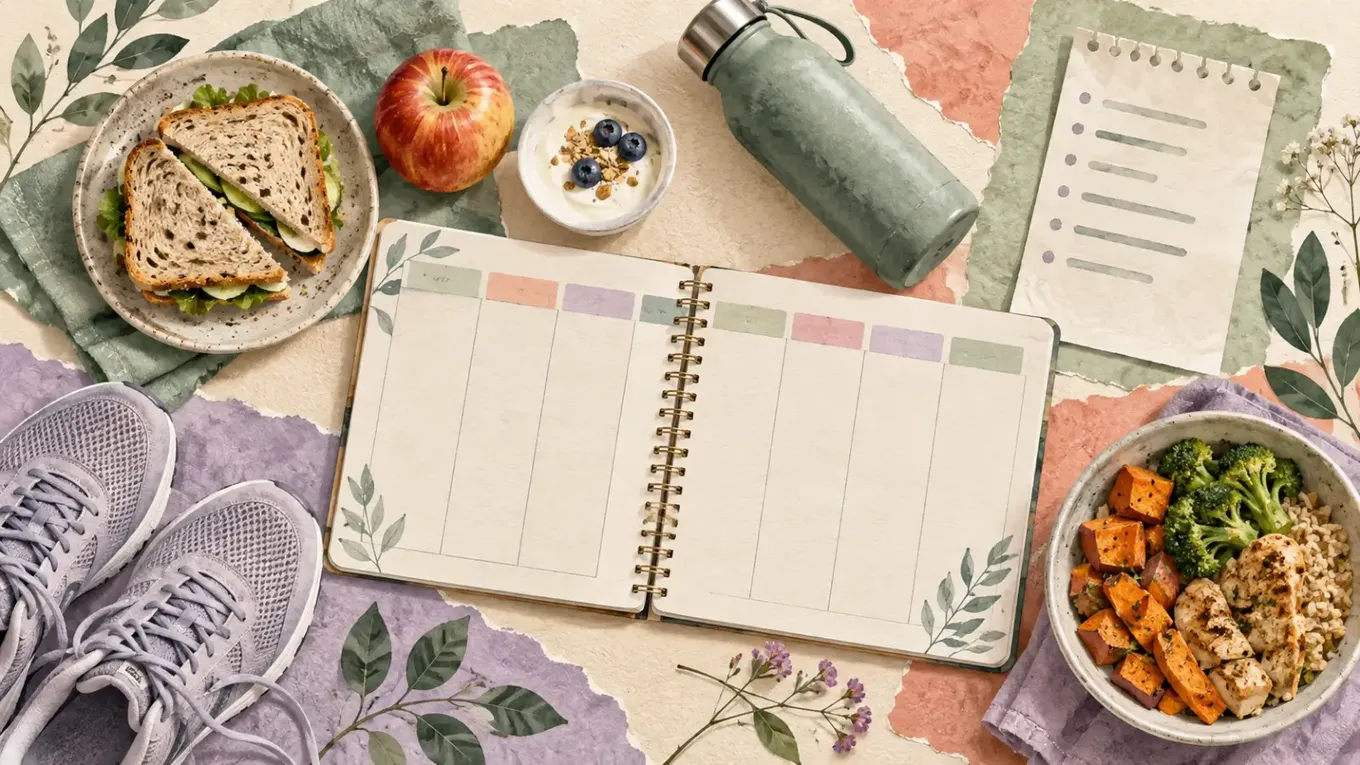
Start with seven ordinary days
Before changing everything, observe one normal week. Include a weekend if you can. Note meals, drinks, movement and weight only if doing so feels safe.
Look for patterns rather than offences:
- Does a rushed breakfast lead to a bakery emergency at eleven?
- Is lunch satisfying, or technically just coffee near a laptop?
- Which portions, cooking oils, drinks or nibbles are easy to forget?
- When are takeaways genuinely enjoyable, and when are they simply the only plan available?
- Does movement disappear on days in the office?
- What changes around your period, after meals out, or following poor sleep?
Shelog can keep food, activity, cycle context and weight in one diary. The aim is not perfect surveillance. It is to notice which two or three changes would make the week easier.
Choose an estimate, not a punishment
Your energy needs depend on your body and activity—not on the daily target used by a friend, influencer, or decades-old diet sheet. Shelog’s maintenance calorie calculator can give you a starting estimate. It is not a measurement of your metabolism or a prescription.
You do not have to count calories to lose weight. If you do track, treat the numbers as estimates. Food labels, recipes, portions and activity trackers all have uncertainty. The useful question is not “Was I perfectly accurate?” but “Does this record help me see a repeatable pattern?”
Make lunch strong enough for the afternoon
A surprising number of evening plans unravel at 4pm.
Try building meals from four useful parts:
- a protein source, such as eggs, yoghurt, fish, chicken, tofu, lentils or beans;
- fruit or vegetables for fibre, variety and volume;
- a carbohydrate you enjoy, such as oats, bread, potatoes, rice or pasta;
- some fat for flavour and satisfaction.
This is compatible with ordinary British food. Beans on toast can gain an egg and tomatoes. A supermarket meal deal can be a sandwich, fruit and yoghurt rather than a joyless box of leaves. Sunday roast is still invited.
The government’s Eatwell Guide describes the overall balance of food groups across a day or week—not a demand that every plate become geometrically perfect.
Then choose changes you can actually repeat. Perhaps you plan three work lunches, measure the cooking oil that usually goes straight into the pan, or keep an afternoon snack so dinner does not begin while you are standing at the fridge. Keep the foods that make life feel like yours.
Let movement be helpful, not corrective
Walking, cycling, swimming, classes, gardening and strength work can all contribute. Movement supports health even when the scale is having a theatrical week.
The UK Chief Medical Officers’ guidance advises adults to build towards at least 150 minutes of moderate activity a week, or 75 minutes of vigorous activity, plus strengthening work on at least two days. It also emphasises that some activity is better than none.
You might start with a brisk walk after lunch, two short strength sessions, or cycling one familiar journey. Do not use exercise to repay dinner. Movement belongs to your life; it is not a fine.
Make Space for Weekends Before They Arrive
A plan that only works Monday to Thursday is a four-day hobby.
Friday dinner, a pub visit, brunch and family food are not surprising plot twists. Decide what matters before the weekend becomes a negotiation:
- Which meal or drink do you genuinely want to enjoy?
- Would eating normally earlier prevent arriving ravenous?
- Could you choose one round, one dessert or one takeaway portion deliberately rather than trying to be “perfect” and then giving up?
- What familiar breakfast or walk helps Sunday feel normal again?
Do not save an entire day’s food for one evening or compensate by skipping meals the next morning. Return to your usual rhythm at the next meal. Consistency is the skill of coming back without drama.
Expect the Scale to Be a Little Rude
Body weight includes fat, muscle, water, stored carbohydrate and food moving through your digestive system. A salty meal, tougher training session, later dinner, constipation, travel or menstrual timing can move the number without producing the same change in body fat.
In a small university study of 42 women, average weight was around 0.45 kg higher during menstruation, mainly alongside greater extracellular water. That number is not a prediction for every woman. It is a reminder that cycle context can make short-term comparisons noisy.
If weighing is useful for you, compare readings taken under reasonably similar conditions and look at several weeks. If it becomes compulsive or spoils your day, use less frequent check-ins or focus on other measures with professional support.
Our guide to slow and steady weight loss can help you interpret that pace. If comparable multiweek records genuinely flatten, use the weight-loss plateau guide before cutting food again.
Review the Plan Once a Week, Not Every Time You Feel Annoyed
Pick a calm ten-minute appointment with yourself. Put the kettle on if you like; judgement is not required.
Ask:
- What felt easy enough to repeat?
- Where did hunger, time, cost or social plans make the week harder?
- Is the multiweek trend moving, once I account for unusual days and cycle timing?
- How are my energy, mood, sleep, periods and exercise recovery?
- What is the smallest useful change for next week?
Then choose one response:
- Continue: the trend is moving and the plan feels manageable.
- Adjust one thing: improve a recurring meal, portion, drink or activity pattern.
- Pause: health, symptoms or your relationship with food needs attention first.
Shelog’s Weight Trend estimates direction and uncertainty from recent records. It cannot distinguish fat from water, prove a calorie deficit, or diagnose why weight changed. Use it as supporting information, not as a judge.
Know When the Plan Is Asking Too Much
Weight loss is not meant to make you progressively less well.
Pause and seek help if you are frequently dizzy or faint, persistently exhausted or cold, losing periods or experiencing increasingly irregular cycles, getting injured repeatedly, or becoming frightened of ordinary meals. The NHS has guidance on recognising eating disorders and getting help. You do not need to look a particular way or reach a particular weight to deserve support.
Unexpected or rapid weight change, swelling, shortness of breath, or symptoms that continue despite no clear change in routine also deserve medical advice. A tracking app can organise observations; it cannot identify the medical cause.
When You Reach One Stone, Practise Staying There
Finish lines have a quiet problem: the plan can disappear when the number arrives. Treat the next few weeks as a transition. Keep the meals, movement and planning habits that genuinely improved life. Gradually make room for maintenance rather than swinging between strict dieting and relief.
You may also decide to stop before one stone because your health, energy, strength or priorities say that is enough. The original number was allowed to be revised. It was a planning tool, not a contract.
The Takeaway
One stone is about 6.35 kilograms. The NHS general rate makes roughly 6 to 13 weeks a useful piece of arithmetic, but not a personal deadline.
The more useful plan is built from ordinary meals, manageable movement, planned weekends, comparable weigh-ins and one calm weekly review. It should leave space for your work, relationships, cycle, culture and favourite foods. If the method requires you to become a different person for three months, it is probably the method—not you—that needs adjusting.
Shelog can keep the everyday evidence together, so a pub dinner or one higher weigh-in does not get to rewrite the whole story.
Track food, movement, cycle context and your weight trend with Shelog.
Sources
- NHS: Tips to help you lose weight
- NHS: The Eatwell Guide
- NICE: Overweight and obesity management—physical activity and diet
- UK Chief Medical Officers’ physical activity guidelines
- NHS: Eating disorders
- Harokopio University of Athens-led study: body weight and body composition during the menstrual cycle
This article is for general education and is not a substitute for personal medical or nutrition advice.
More From Shelog
Keep Reading
Take Shelog with you
Take Shelog with you
Shelog turns the ideas in this article into a simple daily diary—food, mood, movement, and weight in one calm place.